Koh Kood Makka Tree and Giant Banyan: How to Find Them
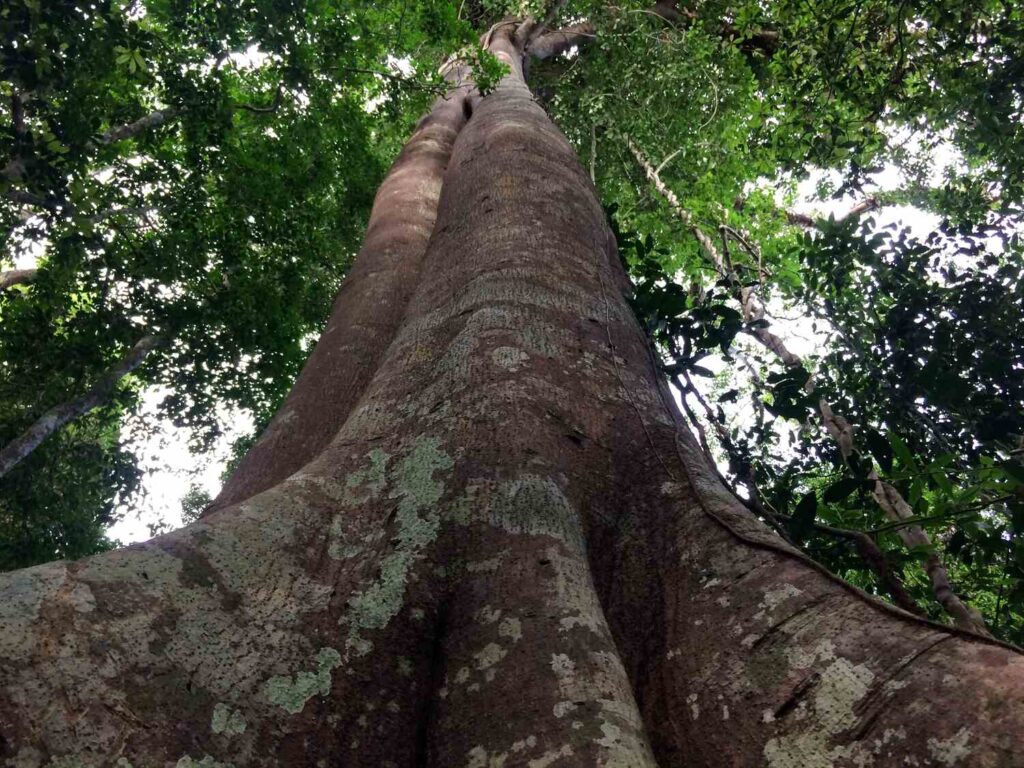
The Makka tree is one of the oldest living things on Koh Kood. This giant hardwood grows deep in the forest, with a huge wild banyan called Sai Yai just down the track. Locals say both trees were here long before anyone settled on the island.
Both trees are free, and each is a short walk from where you park. Locals treat them as sacred, so you’ll often see offerings at the roots. Bring mosquito spray, and pick a dry day for the trip.
In Short
- Cost: free, with no gate, staff or tickets.
- Where: the Khao Din Daeng forest, on the Huang Nam Khiao Waterfall road.
- Time needed: 15 to 20 minutes for both trees.
- Bring: mosquito spray and shoes with grip.
- Skip it: right after heavy rain, when the tracks turn soft and slippery.
Getting to Koh Kood
Our ferry guide lists every boat time, with prices and operators for each route.
In This Guide
- What Is the Makka Tree in Koh Kood?
- Sai Yai, the Giant Banyan Tree
- How to Find the Makka Tree and Sai Yai
- The Walk to the Makka Tree and Sai Yai
- Respecting the Sacred Makka and Sai Yai Trees
- Best Time to Visit the Makka Tree
- Combine the Trees With Huang Nam Khiao Waterfall
- Is the Makka Tree Worth Visiting?
- FAQ
What Is the Makka Tree in Koh Kood?
The Makka tree is a makha, a tropical hardwood that grows huge and lives for centuries. In Thai it’s called Ton Makha Yak, which means giant makha tree. The signs on the island spell it Makayuk.
Nobody knows its exact age, but estimates for the two trees range between 200 and 500 years. Thai tourism sources put the makha at more than 500.
It stands around 30 to 40 meters tall, about as high as a 10- to 13-story building. The trunk is so wide that it takes several people with linked arms to reach around it.
To fit the whole tree in one photo, switch your phone to its wide 0.5x lens and crouch low.
Sai Yai, the Giant Banyan Tree
Sai Yai, the second tree, isn’t a makha at all. It’s a giant wild banyan, a kind of fig tree, and its name simply means big banyan.
Banyans drop roots from their branches, and over the years those roots thicken into extra trunks. After centuries, that builds a wall of twisted roots around the base. In photos, Sai Yai is the more dramatic of the two.
The forest around it isn’t cleared, which makes the tree look smaller in photos than it does in person. Back up as far as the path allows before you take the shot.
How to Find the Makka Tree and Sai Yai
The trees are inland, in a forest area called Khao Din Daeng, on the road toward Huang Nam Khiao Waterfall. They’re about 9 km by road from Ao Salad pier, roughly 15 minutes by scooter.
Follow the waterfall signs, then watch for the signs for Makayuk and Sai Yai. Sai Yai comes first, down a track on the right. The Makayuk tree is about 5 minutes further in.
This is where it’s easy to get lost, because the map pins for both trees are in the wrong spot. It’s better to trust the signs instead.
A scooter is the easiest way in, and our motorbike rental guide has prices and road tips.
The Walk to the Makka Tree and Sai Yai
Both walks start from the small signs on the forest road, where you can leave your scooter. Sai Yai is just down a track on the right, a minute or two on foot. The Makayuk tree is about 5 minutes further in, with a wooden walkway for the last part.
A newer road now goes most of the way in, so the whole visit takes about 15 to 20 minutes.
Off the walkway, roots and mud make the ground uneven. Wear shoes with grip rather than flip-flops, especially after rain.
The mosquitoes are the real challenge here. Spray before you get off the scooter, then keep moving, since they find you fast when you stand still.
Respecting the Sacred Makka and Sai Yai Trees
Locals see both trees as sacred, and some come here to pray for a long life. You’ll often see flowers, coins and colored cloth left at the base, so please leave them as they are.
Don’t climb the roots or branches, and never carve or write on the bark. Take your trash with you, and give the base some space when other people are there.
Photos are fine, but please stay off the roots and keep your voice down when someone is praying.
Best Time to Visit the Makka Tree
Morning and late afternoon are the best times. It’s cooler under the trees, and the light through the canopy is softer for photos.
The dry season, roughly November to April, is the easiest time to go. The tracks are firm, and the road in is dry.
In the rainy months, wait for a few dry days rather than going right after a storm. Leave well before sunset, too, since the paths have no lights.
Combine the Trees With Huang Nam Khiao Waterfall
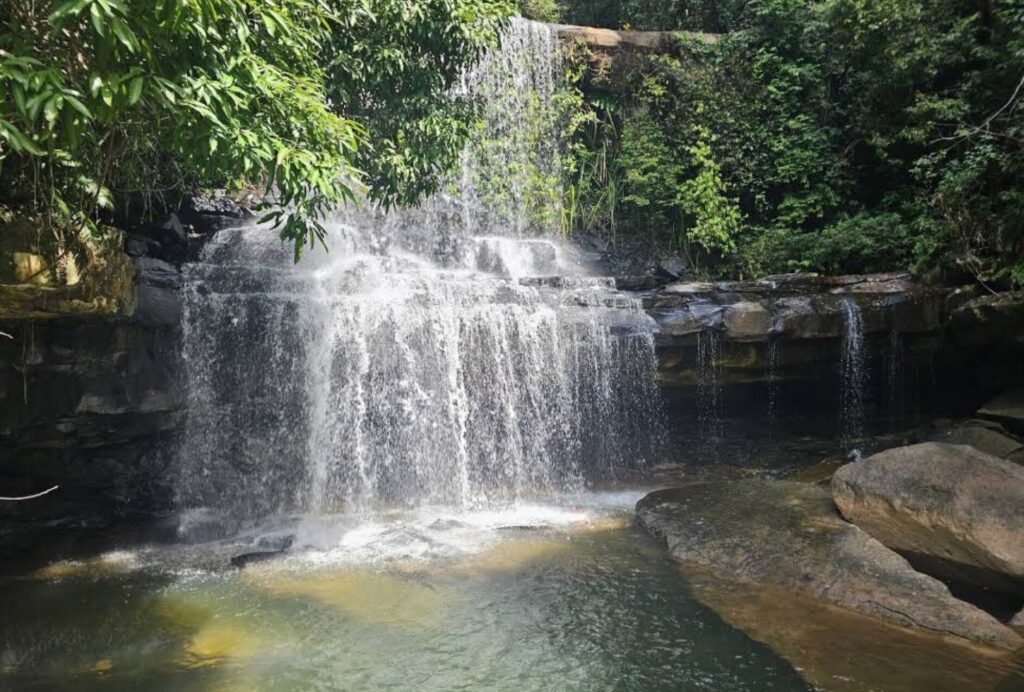
The trees are on the same road as Huang Nam Khiao Waterfall, so it makes sense to do them together. Stop at the trees first, then carry on to the waterfall for a swim.
The waterfall is free too, with steps down to the pool and a small homestay and shop at the top. It’s the nearest place to buy a snack or a cold drink.
The timing matters, because the waterfall flows best between June and November and is only a trickle by January. In the dry season, the trees are the bigger reason to make the trip.
Is the Makka Tree Worth Visiting?
Yes, and it’s an easy yes when you’re riding to Huang Nam Khiao anyway. Both trees are free and take about 20 minutes, so you lose almost nothing by stopping.
Go on a dry morning, spray up before you leave the scooter and save the swim for after. After heavy rain, it’s better to wait a day or two, as the tracks turn muddy and mosquitoes get worse.
Our guide to things to do in Koh Kood can fill the rest of your day.
Where to Stay
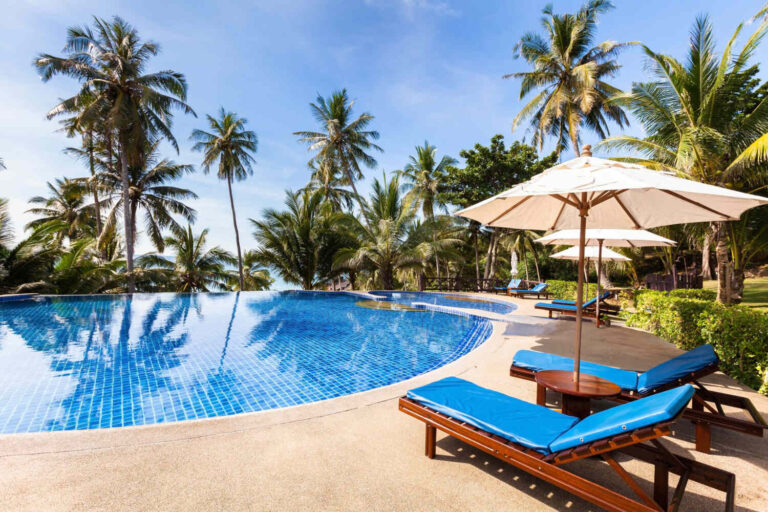
Compare 120 Places to Stay on Koh Kood
Filter hotels, resorts, guesthouses and homestays by beach area, star rating, amenities and review score, then check prices.
FAQ
Where Is the Makka Tree in Koh Kood?
The Makka tree is inland, in the Khao Din Daeng forest on the road to Huang Nam Khiao Waterfall. It’s about 9 km from Ao Salad pier, or roughly 15 minutes by scooter.
Follow the waterfall signs, then the Makayuk and Sai Yai signs. Sai Yai comes first, and the Makka tree is about 5 minutes further in. Ignore the map pins, which are often wrong.
How Old and How Big Is the Makka Tree?
Nobody knows its exact age, but estimates for both trees range between 200 and 500 years. Thai tourism sources put the makha at more than 500.
It stands around 30 to 40 meters tall, as high as a 10- to 13-story building. It takes several people with linked arms to reach around the trunk.
Is There an Entry Fee for the Makka Tree?
No, both trees are free, with no gate, staff or tickets, so your only cost is getting there. Scooters rent for about 200 to 350 baht a day on Koh Kood.
A scooter is the easiest way to reach the forest road. Go in daylight, since the paths have no lights, and bring water, because nothing is for sale at the trees.
What’s the Difference Between Sai Yai and the Makka Tree?
The Makka tree is a makha, a tropical hardwood with one massive trunk. Sai Yai is a giant wild banyan, a fig tree whose hanging roots grow into extra trunks over time.
Those roots give Sai Yai its twisted wall around the base, so it’s the more dramatic photo. Sai Yai is closer to the road, and the Makka tree is a few minutes further in.
What Should You Bring to the Makka Tree?
Mosquito spray comes first, since the forest is full of them. Add water, shoes with grip and a dry bag for your phone when rain looks likely.
Nothing is for sale at the trees. For a snack or a cold drink, carry on to Huang Nam Khiao Waterfall. A small homestay and shop are at the top.
Can You Visit the Makka Tree in the Rainy Season?
Yes, but it’s best to pick your day carefully. After heavy rain, the ground off the walkway turns soft and slippery, and the mosquitoes get worse.
Wait for a few dry days, wear shoes with grip and bring extra spray. The upside is Huang Nam Khiao Waterfall, just down the road, which flows best between June and November.